

A garment’s fit can often be improved without changing its design, but the fabric hidden inside its seams sets a practical boundary. In an alteration shop, seam allowance width determines how much material may be released, how safely a seam can be reshaped and whether a proposed refitting will preserve the garment’s strength and appearance.
Seam allowance width and refitting limitations
A seam allowance is the fabric between the cut edge and the stitching line. Its width is not merely a construction detail: it influences the garment’s original fit, the strength of its seams and the room available for later changes.
Commercial sewing patterns commonly use allowances around 6 to 16 mm, while garment production varies the width according to the seam and fabric. A broader allowance may be left at a center-back seam to support fitting, whereas curved or hidden seams are often narrower to reduce bulk and help the fabric lie smoothly.
Let-out potential in existing seams
Letting a garment out depends on the usable fabric beyond the original stitch line. Many ready-to-wear garments have roughly 1 to 1.5 cm of seam allowance, but that amount is not automatically available: the edge may be overlocked, frayed, clipped or weakened by wear.
The stitch line can sometimes be moved closer to the raw edge, but only if enough fabric remains to form a secure seam. A narrow margin may therefore allow a very small fit adjustment—or none at all—without risking seam slippage or an exposed edge.
Seam construction and fabric behaviour
Width alone does not tell the whole story. The seam construction, thread condition, fabric weight and finishing method all affect whether a margin can be released; a tightly finished seam in a stable fabric behaves differently from a clipped curve in a loosely woven cloth.
Curved areas such as necklines and armholes usually have less allowance because excess fabric would gather or resist pressing. By contrast, a straight center-back seam may contain more material for later adjustments, particularly in tailored garments. The usable margin is the part that remains sound and can be resewn cleanly.
Garment alterations and the direction of change
The limits of garment resizing differ depending on whether fabric is removed or released. Taking in generally creates more options because a new stitch line can be placed farther inside the garment, while letting out is constrained by the cloth already present at the seam.
However, taking in is not simply a matter of sewing a narrower line. A balanced result depends on distributing the change across appropriate seams and preserving the garment’s proportions.
Fit adjustment across multiple seams
When reducing width, an alteration shop may divide the change among several seams rather than remove all the excess from one location. This can preserve the garment’s shape, although the correct distribution depends on its pattern, construction and the area requiring adjustment.
For example, reducing a skirt evenly at the waist may involve its side, front and back seams. The method is not universal: pockets, darts, pleats and decorative details can restrict where fabric may be removed without disturbing the design.
Tailoring constraints at shoulders and armholes
Some areas affect the whole silhouette. Shoulder adjustments can change how the sleeves hang and how the upper body sits, so they are generally assessed before other alterations rather than treated as an isolated narrowing.
The armhole, or armscye, is especially demanding because its curve must remain compatible with the sleeve. Changing its circumference or shape can restrict movement or create pulling, even when the waist or body width has been adjusted successfully. These linked proportions make a professional assessment valuable.
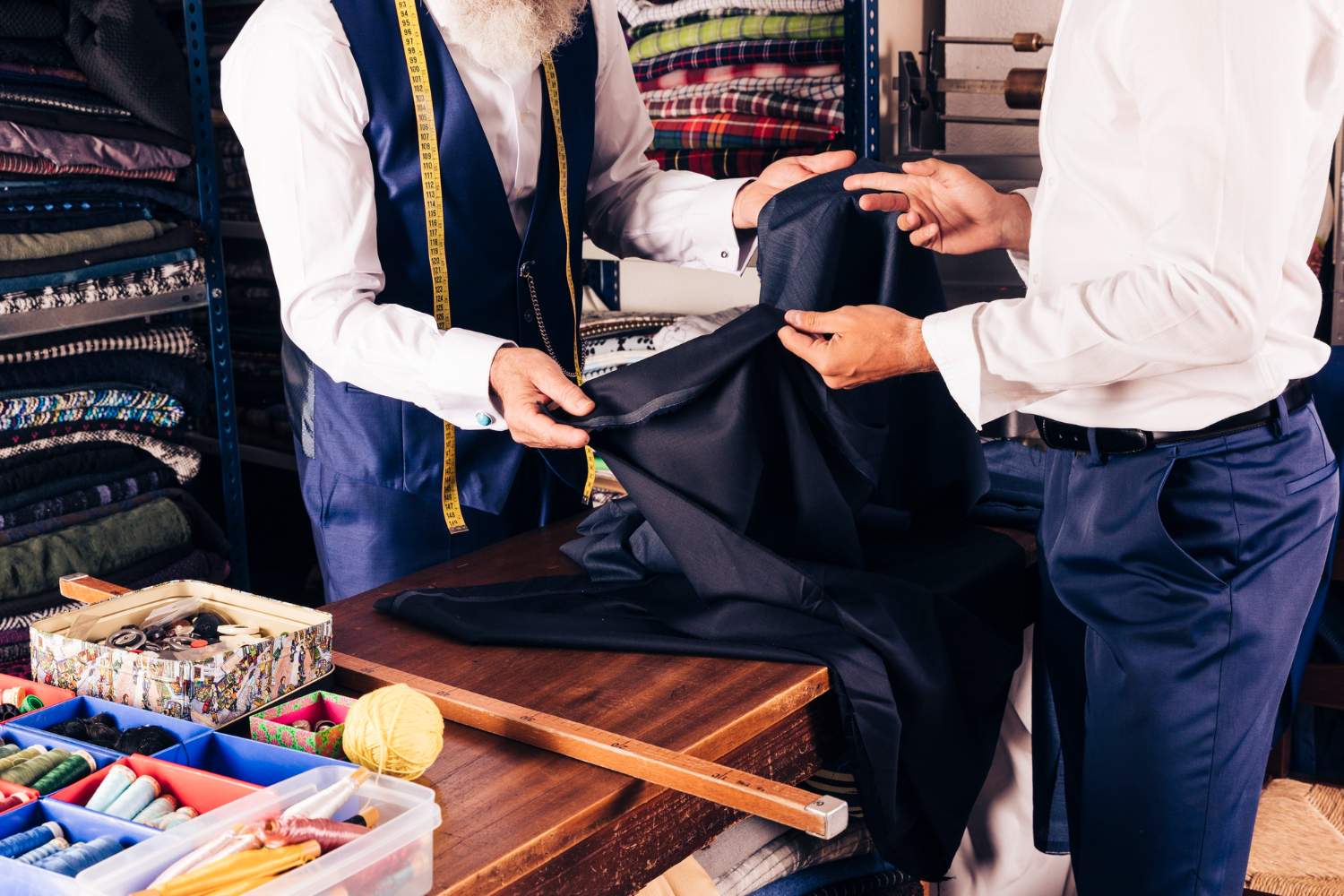
Alteration shop assessment of fabric margins
Before recommending a refit, a tailor examines the inside of the garment and identifies both the available material and the construction features that may limit the work. This check distinguishes a technically possible alteration from one likely to compromise durability or appearance.
Useful assessment points include the following:
- Remaining fabric: Measure the material beyond the existing stitch line and check whether it is intact.
- Seam finish: Look for overlocking, binding, trimming or clipping that could reduce the usable margin.
- Garment structure: Note nearby linings, pockets, darts, panels and design details that affect the adjustment.
- Movement and balance: Consider whether the proposed change will preserve comfort, drape and the alignment of adjoining pieces.
These checks also explain why the visible seam allowance may overstate the amount that can safely be released. A narrow or damaged edge can unravel, while a larger margin may be unusable if it is needed to maintain a curve or support a lining.
Seam allowance guide for common refits
The figures below are practical reference points, not guarantees; actual construction and fabric condition determine the result.
| Seam or area | Typical allowance or condition | Refitting implication |
|---|---|---|
| Curved or hidden seams | Often around 6 mm | Limited room to let out; excess width may distort the curve. |
| Common garment seams | Often around 10–16 mm | Some release may be possible if the edge remains strong. |
| Center-back tailoring seam | May reach 25 mm or more | Can offer greater adjustment scope, depending on finishing and design. |
| Ready-to-wear seams | Frequently around 10–15 mm | Let-out potential is often modest and must be inspected garment by garment. |
Ultimately, seam allowance width provides a boundary, not a promise of a particular result. A careful inspection of fabric margins, seam construction and garment proportions reveals which refits are durable, which require compromise and which are better left unchanged.