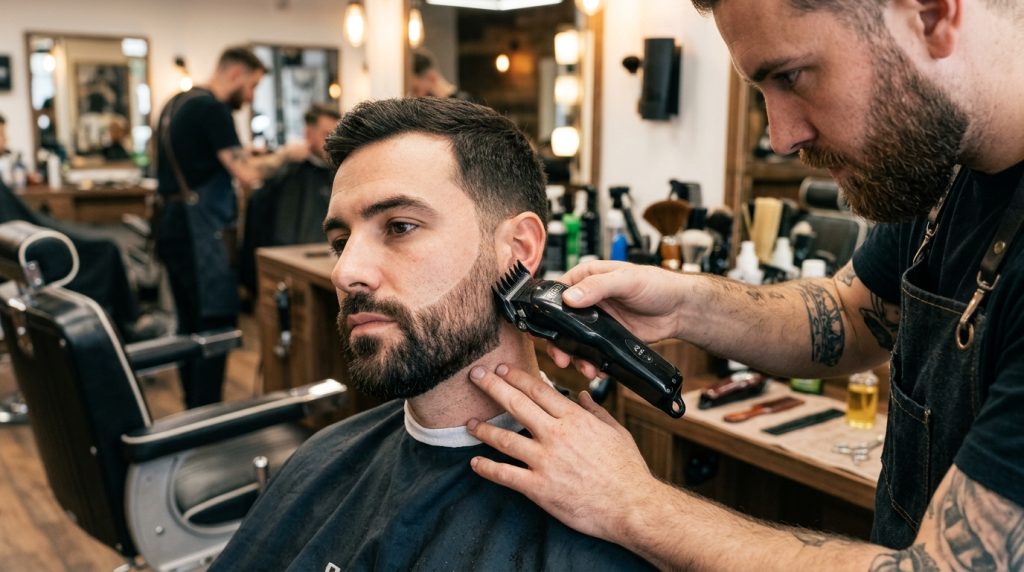
A clean beard trim depends on two decisions that work together: the guard length that controls bulk and the neckline angle that defines the lower edge. Choose either poorly and the beard can look shorter, heavier or less balanced than intended; get them right and even a simple trim gains a deliberate, polished shape. This guide explains how to select beard guard lengths, create natural neckline placement and adapt your approach to different textures.
Beard guard lengths for an even trim
Guard numbers and measurements vary between trimmers, so check the tool’s guide rather than assuming every brand uses identical settings. As a general beard length guide, start with a guard longer than your intended result: removing more hair is easy, but replacing it takes time.
Trim clean, dry hair for the most reliable view of its natural length. Comb it into its usual direction first, then work against the grain in short, overlapping passes. Move section by section across the cheeks, jaw, chin and area beneath the chin, checking the result before reducing the guard.
| Beard length | Typical guard range | Shaping approach |
|---|---|---|
| Stubble | 3–5 mm | Use one consistent setting and define the edges carefully. |
| Short beard | 6–10 mm | Keep the cheeks slightly shorter than the chin if a subtle taper suits the face. |
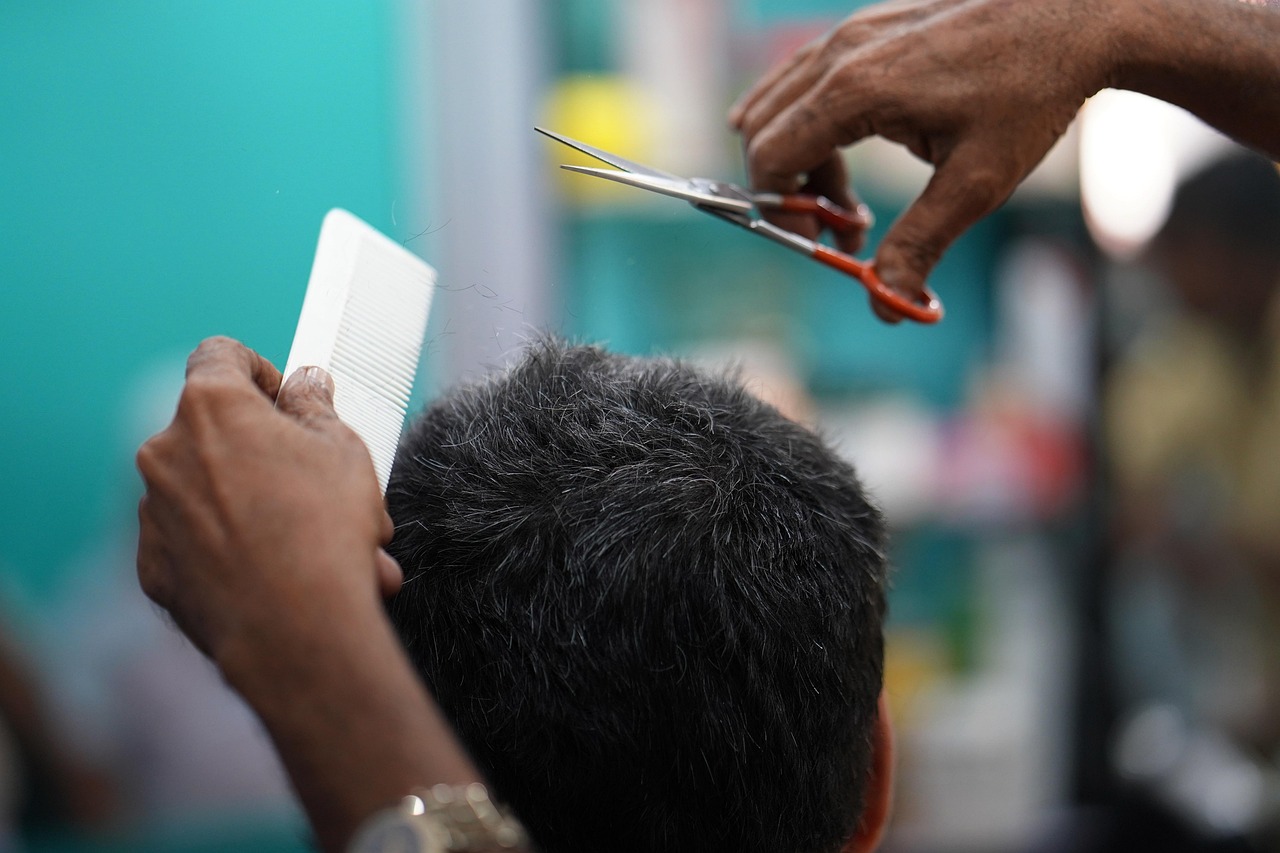
| Medium beard | 10–20 mm | Trim in sections; scissors can refine areas where a guard leaves an uneven outline. |
| Long beard | 20 mm or more | Use a long guard or scissor-over-comb work to control length without creating blunt patches. |
For a blended beard fade, change guard settings gradually around the sideburns instead of creating a hard step between hair lengths. This transition connects the haircut and beard, while preserving fuller growth around the jaw and chin when desired.
Neckline angles for a defined beard neckline
Neckline angles determine whether the beard appears grounded beneath the jaw or abruptly cut across it. A line set too high can make a full beard resemble a chin strap; a low, shallow curve generally leaves a more natural frame.
To find a starting point, locate the Adam’s apple and place two fingers above it. The top of the upper finger gives a useful central reference; from there, imagine a shallow U-shaped curve rising toward the points where the jaw meets the ears. Adapt the curve to the beard and jaw rather than drawing a straight line across the neck.
Outline the curve slowly with a trimmer without a guard, then remove the hair below it. A safety razor can sharpen the cleared area, but short, controlled strokes are easier to manage than repeated passes. Check both sides in a handheld mirror and from the front before refining the edge.
A practical check is to stand naturally and look straight ahead: if the neckline is conspicuous from the front, it may sit too high. Skin irritation or tightly curled hair can make close shaving uncomfortable, so leave a little stubble or shave with the grain when that better suits the skin.
Cheek lines and beard shaping techniques
The cheek line forms the upper boundary of the beard, and its shape changes the overall impression. A natural edge follows the pattern of growth, with isolated hairs cleaned away; a sculpted edge is deliberately defined as a straighter line or gentle curve.
Comb the beard downward to reveal stray hairs, then use the nostrils or mouth corners as reference points to compare both sides. Remove only the hairs above the chosen boundary at first. A high, sharply drawn line can emphasize the cheekbones, while a softer curve often looks less formal; neither shape is universal, so symmetry and compatibility with natural growth matter most.
Before trimming, prepare the beard and tools so the cutting action stays controlled. A basic setup helps prevent tugging, uneven passes and rushed corrections:
- Use a clean trimmer with sharp blades and guards suited to the planned length.
- Keep a wide-tooth comb for detangling and a finer comb for scissor detailing.
- Use bright lighting and a handheld mirror to inspect the jaw and neckline from multiple angles.
- Choose barber scissors for mustache hairs that cross the lip, trimming small amounts at a time.
Curly textures and neckline placement
Curly and coily hair can appear much shorter when it returns to its natural shape after being stretched. Trimming it as though it were straight may therefore remove more length than intended. Work in smaller sections, use a wide-tooth comb to lift and gently stretch the hair, and begin with a longer guard than the target setting.
Trim slightly damp rather than soaking-wet hair, since water can stretch curls and disguise their resting length. Recheck the shape once the beard is fully dry. For tightly coiled growth, avoid repeatedly shaving the same area close to the skin; shaving with the grain and using a sharp single blade may help reduce irritation and ingrown hairs.
Maintenance for a clean beard shape
Different lengths call for different upkeep. Stubble often needs frequent, light passes, while medium and longer beards benefit from less frequent shaping and regular combing. Whatever the schedule, preserve the chosen outline and remove only what is needed to restore balance.
When one side looks longer, comb the beard and inspect it under even lighting before cutting again. If the difference is real, reduce the longer side gradually; do not shorten the entire beard to correct one small area. Consistent beard trimming, careful guard changes and measured neckline angles make the shape easier to maintain between professional visits.