A hotel room can look refined yet still feel restless if street noise travels through the windows, furniture interrupts movement or bedside lighting is too harsh. The most welcoming spaces coordinate acoustics, circulation, privacy and atmosphere from the outset, making comfort feel effortless rather than added on.
Acoustic insulation and hotel room noise reduction
Sound control works best when it is addressed at the building envelope and inside the room. The source of disturbance matters: traffic, neighbouring rooms, lifts and plumbing each call for different measures.
Acoustic insulation for quieter hotel rooms
Walls, floors and ceilings can transmit noise even when a room appears well sealed. Appropriate acoustic insulation, sealed joints and carefully detailed service penetrations help limit the passage of voices, footsteps and mechanical sounds between spaces.
Designers should also consider the route noise takes. A shared wall beside a bed may need greater attention than one bordering a wardrobe or bathroom, while doors and gaps around frames can become weak points in an otherwise sound-resistant structure.
Soundproof windows and exterior noise reduction
Windows are a common route for traffic and city sounds, particularly in rooms facing busy streets. Well-fitted soundproof windows with suitable glazing can reduce outside noise, but their performance depends on installation, seals and the quality of the surrounding frame.
Inside the room, upholstered headboards, rugs and lined curtains help absorb reflected sound. These measures do not replace structural sound control, but they soften the acoustic character of a space and make ordinary sounds feel less sharp.
Room layout and bed placement for restful stays
Once the main sources of noise are understood, the arrangement of furniture can make the room feel more settled. A clear circulation route and a considered sleeping zone reduce both physical and visual interruptions.
Bed placement away from disruptive activity
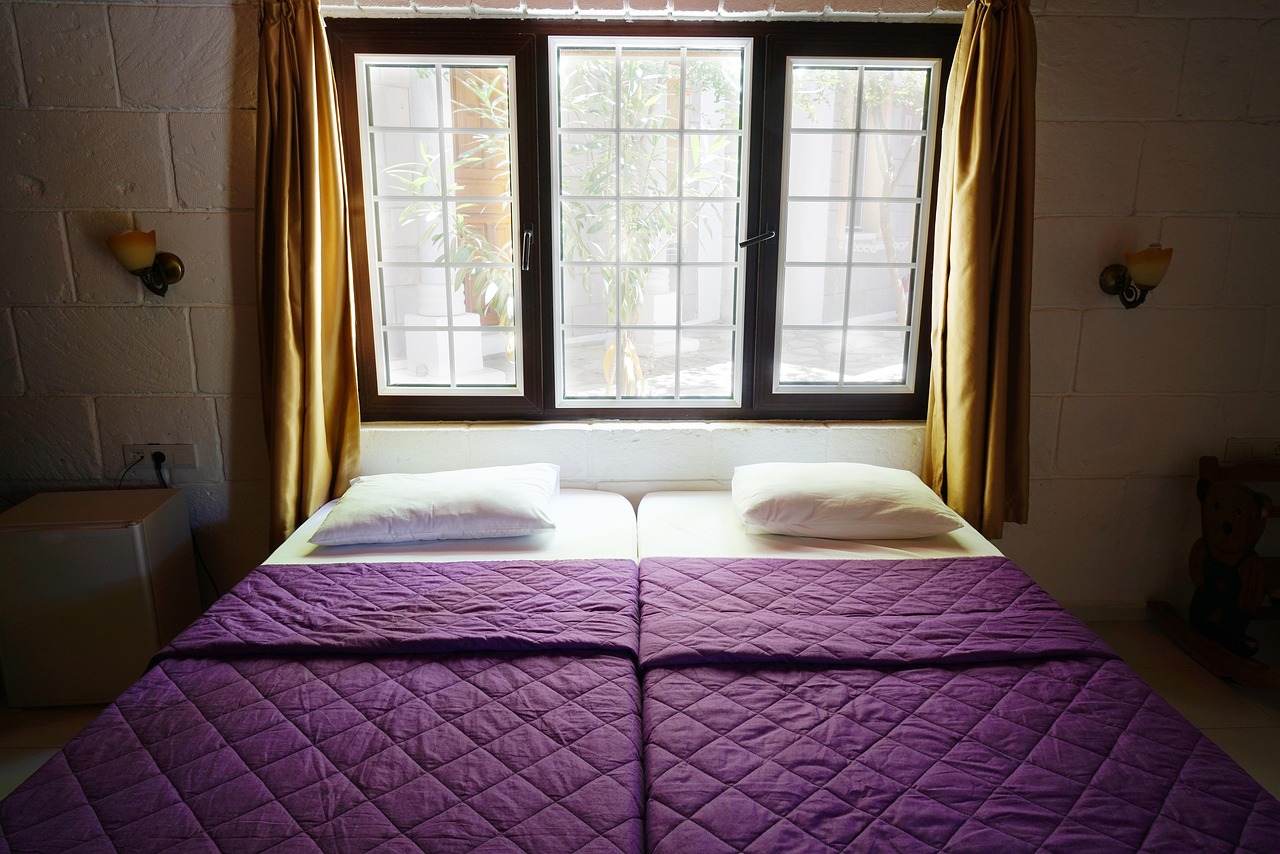
Bed placement should take account of windows, corridors, connecting doors and noisy equipment. Whenever the plan allows, positioning the bed away from lifts, service areas and shared walls can make rest more reliable without calling attention to the design intervention.
The bed should also be easy to approach from both sides where space permits. Clear access supports everyday use, while a stable headboard and soft surface behind it create a more sheltered feeling than a bed pushed against a busy circulation path.
Space optimization and privacy zoning
Effective space optimization is not simply a matter of fitting in more furniture. It means preserving comfortable movement, keeping luggage out of the main route and giving each activity enough room to feel distinct.
Privacy zoning can be achieved through the placement of wardrobes, screens or changes in lighting rather than solid partitions. A desk near the entrance, for instance, can separate work from sleep, while a clear visual path to the bathroom makes the room easier to navigate.
Several layout decisions tend to have an outsized effect on comfort:
- Keep the main route from the entrance to the bed unobstructed.
- Place storage where luggage can be opened without blocking circulation.
- Separate the sleeping area from the entrance and work zone where possible.
- Ensure that bedside controls and reading lights are easy to reach.
When each zone has a clear purpose, even a compact room can feel composed rather than crowded.
Layout establishes the room’s underlying rhythm; materials and lighting then determine how that space feels throughout the day.
Soft furnishings and lighting design for hotel comfort
Visual warmth and acoustic ease often come from the same details. Fabric, texture and carefully controlled light can soften a room while supporting different activities without adding unnecessary complexity.
Soft furnishings that absorb sound
Soft furnishings such as rugs, curtains, upholstered chairs and padded headboards help limit echo by absorbing some reflected sound. Their contribution is especially useful in rooms with hard floors and broad, bare surfaces, where voices and movement can otherwise seem pronounced.
Materials should be selected for durability and maintenance as well as appearance. Layered fabrics and textured finishes can add warmth, but they should not obstruct ventilation, access or the practical cleaning routines required in a hotel.
Lighting design that supports relaxation
Thoughtful lighting design provides separate options for general illumination, reading and nighttime movement. Dimmable bedside lights let guests adjust brightness without flooding the entire room, while indirect sources reduce glare and create a calmer evening atmosphere.
Controls matter as much as the fittings themselves. Guests should be able to find and operate the main switches from the entrance and bed, and low-level lighting can help with nighttime movement without disturbing someone who is sleeping.
| Design choice | Comfort benefit | Planning consideration |
|---|---|---|
| Acoustic insulation | Limits sound transfer between rooms | Address walls, floors, ceilings and gaps |
| Soundproof windows | Reduces intrusion from exterior noise | Specify effective glazing and careful installation |
| Soft furnishings | Softens echoes and adds tactile warmth | Balance absorption with upkeep and access |
| Layered lighting | Supports reading, rest and safe movement | Make controls intuitive and reachable |
Comfort-focused design across the whole hotel room
The strongest results come from treating quiet and comfort as connected design goals. A window that limits street sound, a bed positioned away from disturbance and fabrics that soften the interior all reinforce one another.
This comfort-focused design should remain practical: materials need to withstand frequent use, circulation must stay clear and lighting should be simple to operate. Coordination between interior designers, architects and building specialists helps ensure that aesthetic choices support the room’s acoustic and functional performance.
When the room’s structure, furniture and sensory details work together, the result is not merely quieter; it feels easier to use and more restful from the moment a guest enters.