A natural-looking balayage is shaped as much by what happens between the foils as by the lightener itself. The placement of each section, the choice between freehand painting and foil placement, and the way the color is toned all influence whether the finished result appears softly sunlit or sharply striped.
Mapping hair sectioning for natural balayage
In balayage, hair sectioning determines where light and shadow will sit once the hair moves. A stylist assesses the haircut, natural parting, density, and growth patterns before dividing the hair into manageable zones, so the placement follows the shape of the style rather than creating a uniform grid.
Sections that are too thick can leave lightener unevenly distributed, while very fine slices may produce a brighter, more blended effect. The aim is not to lighten every strand, but to leave enough of the natural base visible to preserve natural dimension.
Before choosing a placement method, it helps to distinguish the purpose of each section. These common approaches support different levels of brightness and contrast:
- Diagonal sections can create a soft, flowing effect that follows the movement of layered hair.
- Fine slices distribute brightness more evenly and can soften the transition between darker and lighter areas.
- Wider panels create more noticeable ribbons of color, particularly when the surrounding hair retains depth.
Sectioning is therefore a design decision, not just a practical step. A thoughtful map gives the lightener a clear role in the overall color pattern.
Balancing placement around the hairline
Hairline sections are often finer because concentrated brightness at the front can look stark against a darker base. Carefully placed face-framing highlights bring light near the complexion while keeping the surrounding strands deeper for contrast.
The parting and the way hair is usually worn also matter. Planning for natural movement helps prevent a bright, isolated stripe when the hair is tucked behind the ear or parted differently.
Preserving depth through the crown and ends
The crown catches light readily, so placing lightener too close together there can make the result appear uniformly blonde. Leaving selected sections untouched preserves a darker base that gives the brighter pieces room to stand out.
At the ends, the technique can follow the haircut: layered tips may need a lighter touch than blunt lengths to avoid a concentrated band of brightness. The placement should complement the cut, not compete with it.
Choosing lightener application and foil placement
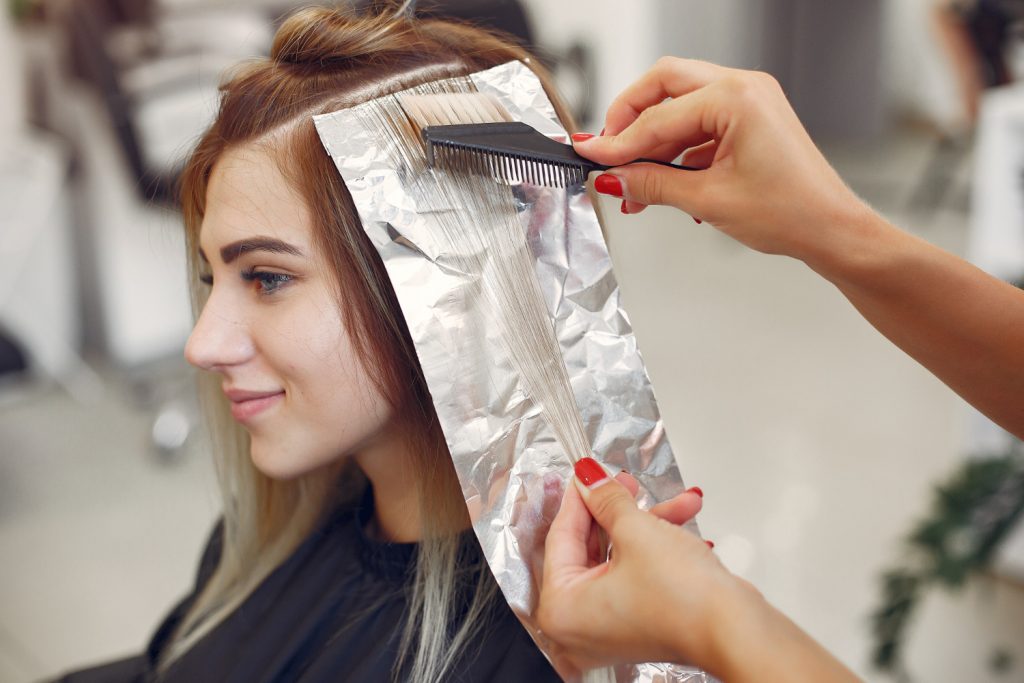
Once the sectioning is planned, the stylist chooses how to apply the lightener. Freehand painting and foil placement are not competing techniques; they offer different kinds of control and can be combined to create a natural transition from root to tip.
Freehand painting allows the stylist to vary the saturation and leave softer areas between brighter strokes. Foils, by contrast, isolate selected sections and can support more concentrated lightening, making them useful when extra lift or definition is needed.
The choice depends on the starting color, desired contrast, hair condition, and the result of a strand assessment. The following comparison shows how each method contributes to the overall finish.
| Technique | Typical effect | Useful consideration |
|---|---|---|
| Freehand painting | Soft, graduated brightness | Allows varied saturation and visible depth between painted sections. |
| Foil placement | More controlled, concentrated lift | Separates selected sections and can help increase brightness. |
| Combined placement | Blended brightness with defined accents | Can balance soft lengths with brighter pieces near the face or crown. |
Neither approach guarantees a particular shade: the hair’s underlying pigment and condition affect how it responds. For a closer look at application and placement, a guide to maintaining balayage color also explains why thoughtful technique is only one part of a lasting result.
Controlling saturation during lightener application
Even application matters because lightener needs consistent contact with the intended strands. A stylist varies the amount and placement to avoid a hard line, keeping product away from areas where a softer transition is desired.
Care is especially important where sections overlap or meet previously colored hair. Applying product selectively helps limit unnecessary exposure and supports a more even lift.
Using foil placement with intention
Foils can retain warmth around a section and separate it from surrounding hair, which makes them helpful when a brighter result is planned. Their position and spacing affect the pattern: closely grouped foils may create a denser highlight, while wider intervals allow more of the base to show.
Foils are not essential to every balayage service. Used selectively, they can complement freehand painting without sacrificing the softer, hand-painted character of the overall color.
Managing hair lifting and toning for a seamless finish
Hair lifting is the process of lightening the hair’s underlying pigment; it does not, by itself, create the final tone. The amount of lift required depends on the starting shade and the intended result, while the hair’s condition determines how cautiously the process should proceed.
Lightening can reveal warm underlying tones, which is a normal part of the process. A stylist evaluates the lift during processing rather than relying on a fixed timing assumption, since different sections may respond at different rates.
After rinsing, toning refines the color by adjusting its visible warmth or coolness. These stages have distinct purposes, as the comparison below makes clear:
- Lightener raises the level of the selected strands by reducing natural or artificial pigment.
- Toner adjusts the shade after lightening, helping the finished color harmonize with the overall look.
- Root smudging softens the transition at the roots, connecting brighter lengths with the natural base.
Natural balayage comes from coordinated choices: a sectioning plan that respects the haircut, an application method suited to the desired brightness, and finishing steps that preserve tonal variation. A qualified colorist can assess hair history and condition before recommending a personalized placement and lightening approach.